Introduction to GIT
Published December 6th, 2010 Under Configuration Management | Leave a Comment
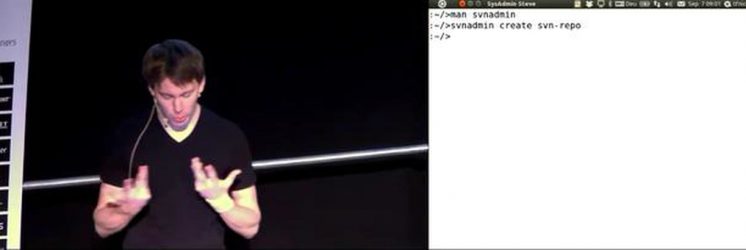
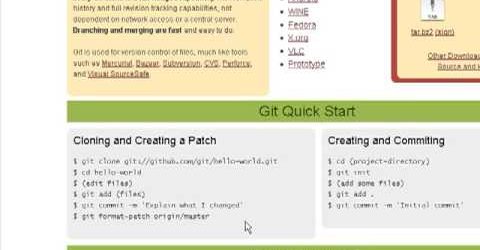
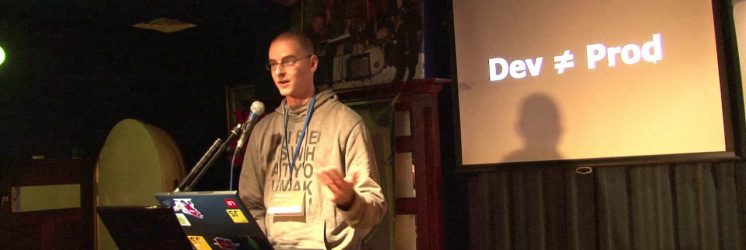
An introduction to distributed version control using Git, and how your VCS should work with you and not against you. How DVCS can completely alter your development process, streamline it, and help you produce better software, faster. Covering how local repositories speed up your development, multiple authoritative sources, distributed teams, multiple workflows, and some of the more distinct features of Git. With experiences from an OSS team on how the migration from SVN to Git has helped the project and changed how the team works.
Watch this streaming video from the Norwegian Developer Conference 2010
Branching and Merging Practices
Published October 25th, 2010 Under Configuration Management | Leave a Comment
Development teams frequently get wrapped around the tree when it comes to branching. It’s easy to lose track of code in a dense tree and even easier to release code that you didn’t mean to release. While branching can get complicated, there are some basic branching structures that can be applied to most of the common scenarios to help untangle you. In this session, learn the three basic branching structures and several of the most common variations to help ease promotion models and deployment scenarios. Learn best practices and how to avoid “gotchas” that can derail an entire release. At the end of this session you will be able to determine which branching pattern is most effective for your particular scenario and walk through how to perform code promotion (including bug fixes, hot fixes and multiple releases) for each branching pattern. After applying these principles you will be able to streamline your release process and code promotion process and reduce unintended bugs in released software.
Download video in other formats and presentation
Gradle – A Better Way To Build
Published October 20th, 2010 Under Configuration Management | Leave a Comment
Specially for large enterprise builds, the build performance is critical. Yet the build must be reliable and should be intuitive to use. Gradle offers plenty of features to support this: Gradle keeps a history of past build executions, provides ready to use and performant tools for change detection. You will learn about the unique Gradle incremental compile with a state-of-the-art dependency analysis. We will show Gradle’s multi-threaded test execution and the advantages of a fully customizable fork frequency. You will also learn about Gradle’s smart skipping and the many ways how you can control the execution of a multi-project build and optimize it for certain use cases. All this is provided out-of-the-box for standard Java project’s. Yet Gradle provides all this not via a rigid framework but by a rich domain model. That way all those features a part of an extremely customizable, true build language.
Scott Chacon on Git and GitHub
Published October 4th, 2010 Under Configuration Management | Leave a Comment
Scott Chacon talks about the technologies that power GitHub (Erlang, Redis,…), and the benefits of Git as a version control and as a storage system.
http://www.infoq.com/interviews/chacon-github
Zen and the Art of Build Script Maintenance
Published September 13th, 2010 Under Configuration Management | Leave a Comment
Build scripts are an essential art in any software project. And yet they are so often fragile, brittle and unportable things, hard to understand and harder to maintain. In this talk, we cover what constitutes a good build script, and look at a few of the essential rules in writing one. John Smart looks at general techniques that are applicable to any build scripting technology, as well as some technology-specific tips for Ant and Maven.
http://skillsmatter.com/podcast/agile-testing/zen-and-the-art-of-build-script-maintenance
From Dev To Production Through Build Pipelines and Teamwork
Published August 11th, 2010 Under Configuration Management, Continuous Integration | Leave a Comment
Sam Newman discusses how to improve the process going from software development to production, covering the following steps: building, configuration, automated testing, deploying, monitoring, logging and disasters. He offers practical advice on how to avoid transforming the development, QA and Operations into silos by using build pipelines providing continuous builds and deployment.
http://www.infoq.com/presentations/From-Development-To-Production
Continuous Integration, Pipelines and Deployment
Published August 4th, 2010 Under Configuration Management, Continuous Integration | Leave a Comment
When Continuous Integration grows within organizations, Build Pipelines can help to manage the workflow to get software through the different checkpoints to get applications to production. This process can further evolve into Continuous Deployment. A side effect of this, is that the management of the CI infrastructure also requires an increased involvement of sysadmins and operations.
Video Producer: Devops Days
Related Resources:
* Continuous Integration: the Cornerstone of a Great Shop
* Continuous integration tools directory
RSS
Twitter