Comparing FitNesse, Cucumber and keywords for Domain Specific Test Languages
Published August 19th, 2010 Under Functional Testing | Leave a Comment
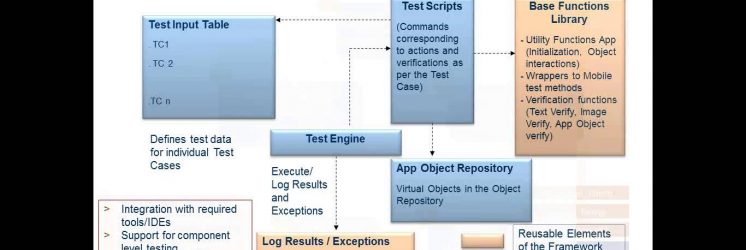
FitNesse, BDD/ATDD based tools (like Cucumber) and various keywords based tools each have their followers when it comes to automated testing at the system or acceptance level. But few have tried each type and many are wondering which one best suits their organisation, project or product. The concept of Domain Specific Test Languages (DSTL) is a great improvement over record & playback based approaches to automated testing and promises easy to read & write tests in the language of the business and low maintenance effort. This interactive session first presents DSTLs and how they fit in an Agile process & team and then considers how each type of tool supports this effective approach to automated testing. The tools will be compared using one non-trivial test case, to illustrate some of their strengths and limitations
Watch this video on Skillsmatter.com
Test-Driven Development – From Painful to (Near) Zero Friction
Published August 17th, 2010 Under Unit Testing | Leave a Comment
Matt Honeycutt doesn’t like development friction and especially testing friction. Over the last several years, his approach to test-driven development and the style of test cases he creates have changed drastically in an effort to eliminate testing frication. In these screencasts, he uses TDD to implement a class in RageFeed. Starting with very coarse, high-friction unit tests, they will show you how you can gradually reduce the friction by creating better tests. Finally, you will see how easy it is to create clean, readable, specification-style tests in RageFeed today.
Watch these videos on TryCatchFail.com
Agile Testing and SeleNesse
Published August 16th, 2010 Under Functional Testing | Leave a Comment
Tools like FitNesse allows test automation to happen quickly and broadly. However, many companies can’t support it in their infrastructure. Dawn Cannan got around this problem by helping create SeleNesse, a Selenium-FitNesse plugin. She also paired with developers in the Java space and the .NET space to bring this plugin to both domains.
Driving an ASP.NET MVC Application Outside-in with SpecFlow
Published August 9th, 2010 Under Functional Testing | Leave a Comment
You will learn the basics of Behavior Driven Development (BDD) and Acceptance Test Driven Development (ATDD) as well as how to use these concepts to bridge the gap between requirements and implementation ? on .NET platform with SpecFlow. SpecFlow is an open source project inspired by Cucumber aiming at bringing pragmatic BDD to .NET.
Watch this video on Skillsmatter.com
Continuous Integration, Pipelines and Deployment
Published August 4th, 2010 Under Configuration Management, Continuous Integration | Leave a Comment
When Continuous Integration grows within organizations, Build Pipelines can help to manage the workflow to get software through the different checkpoints to get applications to production. This process can further evolve into Continuous Deployment. A side effect of this, is that the management of the CI infrastructure also requires an increased involvement of sysadmins and operations.
Video Producer: Devops Days
Related Resources:
* Continuous Integration: the Cornerstone of a Great Shop
* Continuous integration tools directory
Grease your Suite: Tips and Tricks for Faster Testing
Published July 15th, 2010 Under Unit Testing | Leave a Comment
Continuous integration is a great way to keep your code base organized and well tested. But when a test suite takes so long to run that developers stop running it before every commit, they lose their constant feedback loop and quality drops. In this talk we’ll explore methods of speeding up the test suite so that developers can be confident about the code they’ve written before they share it with the team. We’ll start with quick cheap fixes, like optimizing your operating system, that can yield drastic results (like cutting test time in half!) with no loss of functionality. We’ll also cover methods of writing tests that reduce their run time with gems like fast_context for shoulda. At then end, we’ll move to more involved methods of multi-tasking your test suite to run on all the cores in your workstation and even to setting up a distributed testing cloud to run all your tests in parallel. Every tactic will be backed up with hard benchmarks from real production code. We’ll show the evolution of a test suite from its full run time of 13 minutes down to a number you won’t believe.
Video Producer: Gotham Ruby Conference
Sustainable Test-Driven Development
Published July 7th, 2010 Under Unit Testing | Leave a Comment
Steve Freeman proposes advice to write good tests that make development easier avoiding adding code that is hard to maintain. This presentation covers: test readability, complex test data, test diagnostics and test flexibility.
http://www.infoq.com/presentations/Sustainable-Test-Driven-Development
« go back — keep looking »
RSS
Twitter
Facebook